What a $30k Mobile App Budget Actually Buys in 2026
A frank breakdown of what USD 30,000 realistically gets you for a mobile app in 2026 — where the money goes, what a 30k scope can and can't include, and how to make it stretch.
USD 30,000 is one of the most common budgets we hear, and one of the most misunderstood. Some founders expect it to buy a fully featured, two-platform product that rivals an app a venture-backed team spent a year on. Others have been told 30k "isn't serious money" for an app and arrive apologetic. Both are wrong. $30k is a real, workable budget — for the right scope. The entire game is matching the scope to the number, honestly, before anyone writes code.
This is a frank breakdown of where that money actually goes, what it can and cannot buy in 2026, and how to make it stretch. I price and build this kind of work, so these are the trade-offs we walk clients through every week, not theory.
Where the money actually goes
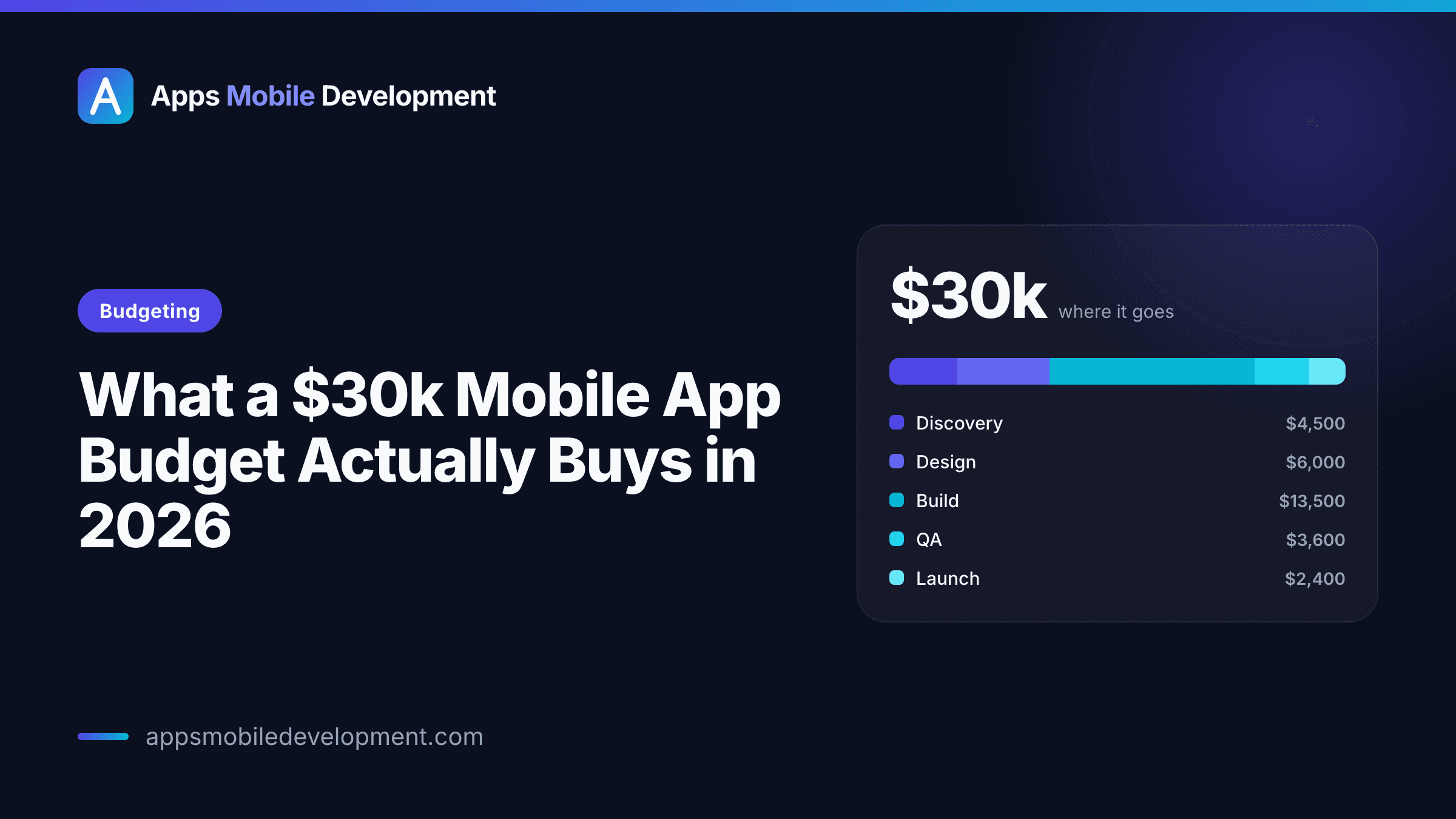
A common myth is that an app budget is "the cost of coding." Engineering is the biggest slice, but it is not the only one, and the others are not optional padding — skip them and you get a fragile app that gets rejected from the store or falls over in front of your first real users. Rough ranges for a well-run $30k project:
- Discovery and planning — ~5–10%. Turning your brief into a locked, buildable scope: user flows, the feature list everyone agrees on, technical decisions. The cheapest place to change your mind is here, before anything is built.
- Design (UX + UI) — ~15–25%. Wireframes for the core flows, then a polished, accessible high-fidelity design for the screens users actually live in. Underfund this and the app works but feels cheap.
- Engineering — ~45–55%. The build itself: the app, the integrations, the backend wiring. The largest slice, as it should be.
- QA and testing — ~10–15%. Real testing across devices and OS versions, not just "it ran on my phone." This is where store rejections and embarrassing v1 bugs get caught.
- Store setup and release — ~3–5%. App Store and Play Console configuration, store listings, review submission, and dealing with the inevitable first-submission feedback.
- Project management — ~10%. Someone keeping scope, schedule, and communication on the rails. On a fixed budget this is what stops a project quietly drifting 20% over.
Laid out as a share of the whole, the split looks like this:
Budgeting
Where a $30k app budget goes in 2026
- EngineeringBuild45–55%·≈$15k45–55%
- Design (UX + UI)15–25%·≈$6k15–25%
- QA & testing10–15%·≈$4k10–15%
- Project management~10%·≈$3k~10%
- Discovery & planning5–10%·≈$2k5–10%
- Store setup & release3–5%·≈$1k3–5%
More than a third of the budget is not “writing features” — that’s the difference between an app that ships and survives and a pile of half-finished screens.
Notice that more than a third of the budget is not "writing features." That is not waste; it is the difference between an app that ships and survives and a pile of half-finished screens. When a quote looks dramatically cheaper than the rest, it is usually because one or more of these slices has been quietly removed — most often QA and project management.
What $30k CAN buy
Spent well, 30k delivers a focused, genuinely good product. Realistically that is one of these shapes:
- A polished MVP on a single platform (native iOS or native Android), or
- A lean cross-platform build (React Native, typically) reaching both stores with a tighter feature set.
Either way, expect to land roughly:
- A handful of core features done properly — think three to five real features, not fifteen. Each built with its proper empty, loading, and error states, not just the happy path.
- User accounts and authentication — sign-up, login, password reset, and social sign-in where it makes sense.
- One meaningful backend integration — a payment provider, an existing API, or a managed backend (a service like Firebase or Supabase) that handles your data, auth, and storage without a bespoke server to build and run.
- Polished, accessible design on the core flows — the screens users touch every day look and feel professional.
- Proper QA and a clean store launch — tested across a sensible device matrix, submitted, and live.
That is a credible product you can put in front of real users, learn from, and raise money or revenue against. Plenty of successful apps started exactly this lean. The constraint forces the discipline that makes the product good.
What $30k CANNOT buy
Equally important, and where honesty saves everyone pain. At this budget you should not expect:
- Everything on your wish list. If your feature list has fifteen items, 30k will not build fifteen items well. It will build five well or fifteen badly. Choose the former.
- Two native platforms, both gold-plated. Two separate native builds roughly double the client-side work. With 30k that means cutting scope hard on each, or picking cross-platform, or picking one platform first.
- Heavy real-time or AI features. Live multiplayer, real-time collaborative editing, robust offline sync, or custom machine-learning models are each substantial in their own right. One might fit if it is the whole point of the app and you cut elsewhere; several will not.
- Large content operations. Apps that need a big catalogue populated, ongoing editorial, or a complex content-management backend carry costs well beyond the app build.
- Endless revisions. A fixed budget buys a defined amount of design and build. "Just one more change" is how 30k quietly becomes 45k.
None of this is a knock on a 30k budget. It is simply the shape of the trade-off, and naming it early is far kinder than discovering it in month three.
What actually drives the cost
If you want to move the number, these are the levers — roughly in order of impact:
- Number of platforms. The single biggest lever. One platform versus two is close to the difference between a comfortable scope and a stretched one.
- Custom design. Heavily bespoke UI, animation, and brand work costs more than a clean, system-aligned design. Beautiful does not require expensive, but custom-everything does.
- Integrations. Each external system — payments, maps, a legacy API, a CRM — is real work, and an undocumented or old system is more work and more risk than a modern one with clean docs.
- Real-time and offline sync. "It should work offline and sync when reconnected" sounds small and is one of the genuinely hard problems in mobile. Same for anything live and real-time.
- Compliance. Handling sensitive data (health, finance, anything involving children) brings extra requirements around consent, storage, and sometimes architecture. Worth every penny when you need it; a real cost to plan for.
If your budget is fixed at 30k and the scope is too big, this is your list of where to cut: drop to one platform, lean on system-standard design for non-core screens, defer the second integration, and postpone offline sync to a later phase.
Make it stretch: fixed-price, scope-locked phases
The approach we use to make a 30k budget go furthest is fixed-price work against a scope that is locked before the build starts. You know the number, we know the deliverables, and there is no open-ended meter running. That only works if scope is genuinely fixed — which is exactly why the discovery phase earns its place in the budget.
The bigger unlock is staging the app over phases. Instead of trying to cram everything into one 30k build, you spend it on a tight, excellent Phase 1 — the core product, launched and in real users' hands. You learn what users actually do. Then Phase 2 spends the next budget on the features that earned their place, not the ones that merely felt important on day one.
This does two things. It gets you to market sooner, on a smaller cheque. And it stops you spending a meaningful chunk of 30k building features your users turn out not to want — which, in our experience, is where a surprising amount of first-build budget quietly goes. A phased plan does not make the app cheaper overall; it makes every pound you spend land on something you have evidence for.
So: is 30k enough? For a focused, well-built first version of the right app, yes — comfortably. For "everything, on both platforms, perfect, first time," no, and no honest team will tell you otherwise. The useful question is not "is 30k enough" but "what is the sharpest possible version of this app for 30k" — and that has a good answer far more often than people expect.
If you have a number in mind and a rough idea, the quickest way to find out what it really buys is to talk it through scope-first. Bring your must-have features and your budget; we will tell you straight where the line falls.
Written by
Alex Rivera
Founder & Lead iOS Engineer
Alex has spent eight years building native iOS apps in Swift, from solo App Store releases to features inside large consumer apps. Previous roles span senior iOS engineering and tech-lead positions on product teams. Founded Apps Mobile Development to do focused, fixed-scope mobile work without agency bloat.
More from the blog
 Engineering
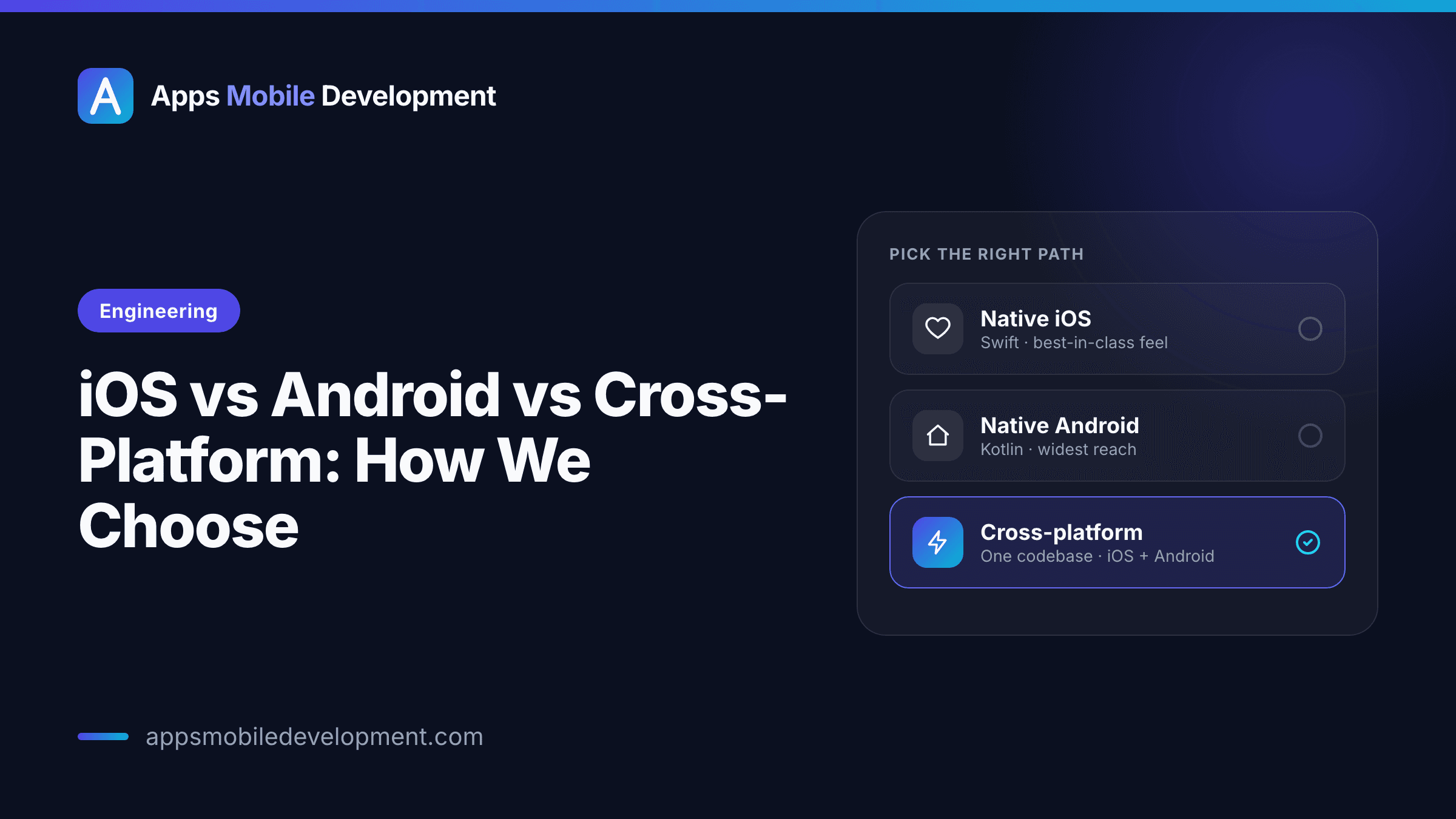
iOS vs Android vs Cross-Platform: How We Choose
An honest engineering decision guide. The real question isn't which platform is best — it's what fits your audience, budget, and roadmap. Here's the framework we use.
Marcus Lee7 min read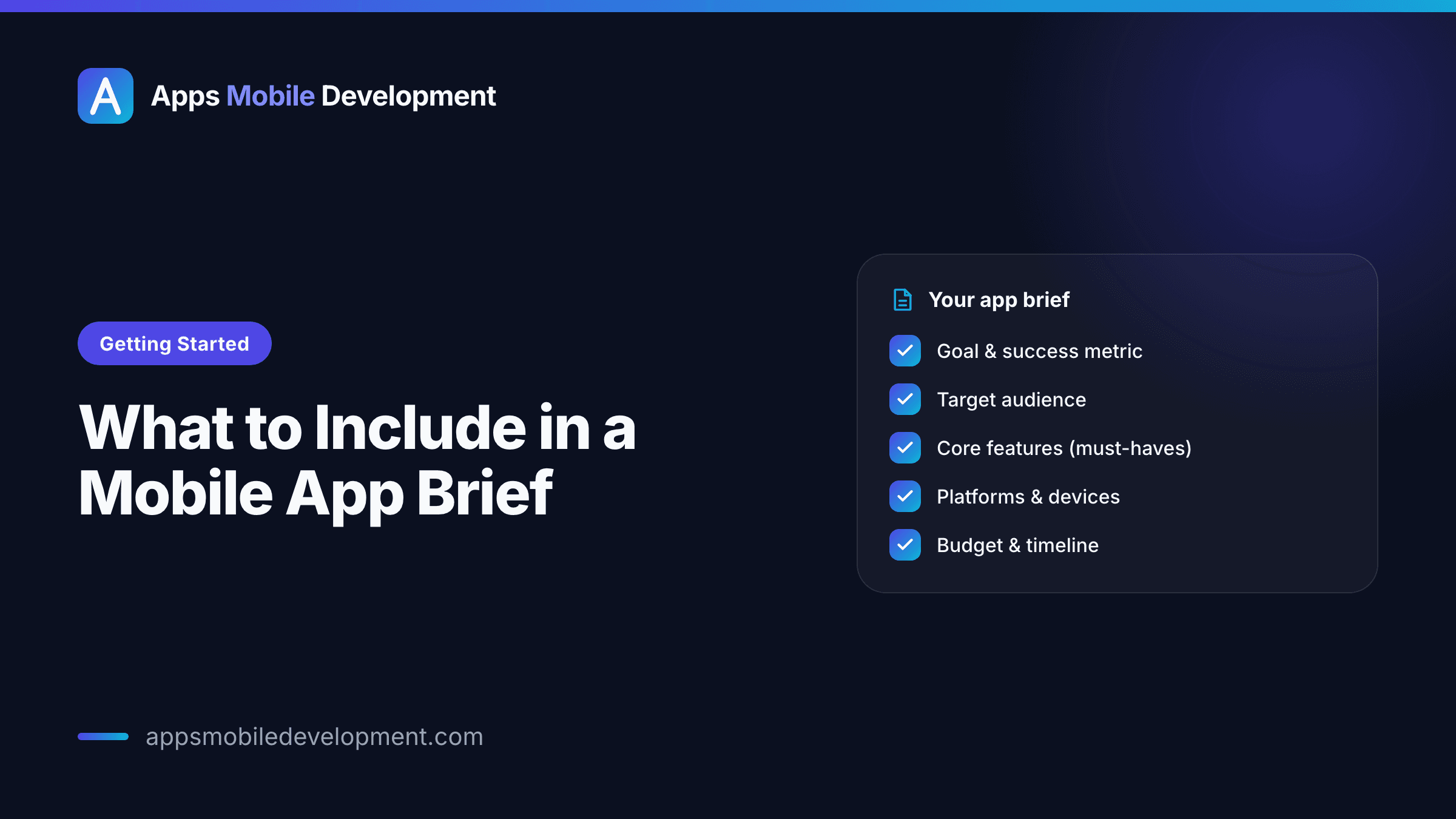 Getting Started
What to Include in a Mobile App Brief
A practical, no-fluff guide to writing a mobile app brief that gets you an accurate quote instead of a vague range — what to include, what to leave out, and a checklist to copy.
Priya Shah8 min read
Ready to turn an idea into an app?
Tell us what you're building. We'll give you an honest read on scope, budget, and timeline.